Invasive Swallow-wort
Black and pale swallow-wort were introduced in the US from Europe in the 1800s. These European swallow-worts are highly invasive; they form dense monocultures in shade or full sun. Swallow-worts also produce compounds with anti-bacterial and anti-fungal properties, and inhibit the growth of many pathogens. The roots contain haemolytic glycosides, which are toxic to mammals, including livestock. Swallow-worts are also distasteful to many insect larvae and toxic to some, including monarch butterfy caterpillars. It is not clear how often female monarch butterflies lay eggs on swallow-wort, but when they do, the caterpillars die. In general, insect diversity and abundance is significantly lower in dense stands, with cascading effects on the entire food chain.
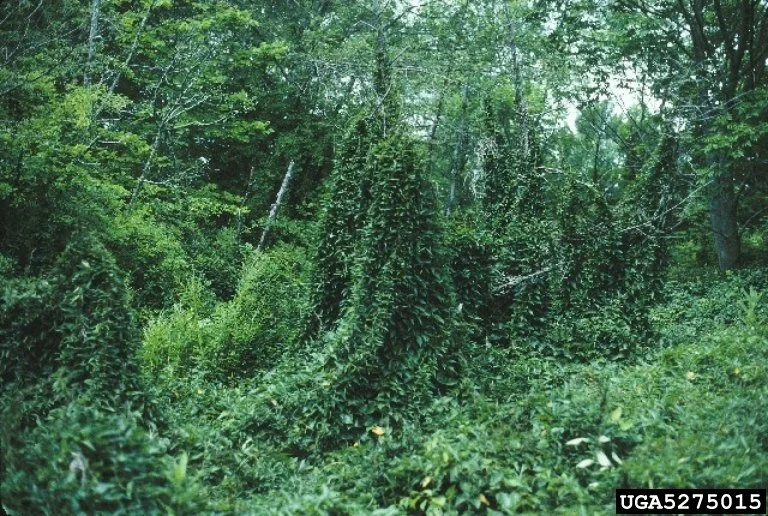
Identification
Twining vine up to 6 ft. long.
May climb adjacent plants.
Pepper-like seed pods split open in mid-summer.
Dark green leaves with a waxy coating.
Flowers give off slight rotting odor.
Bloom in June and July.
Black swallow-wort: flowers are small, dark purple, and have 5 petals covered in fine light hairs with petals that are as wide as they are long.
Pale swallow-wort: flowers are pink to dark burgundy. The narrow petals are longer than they are wide.
Swallow-wort vines will grow over larger plants, blocking out sunlight and strangling plants. Photo: Leslie J. Mehrhoff, University of Connecticut, Bugwood.org
Habitat
Black swallow-wort vines thrive in both shade and sun and are found in disturbed areas along roadsides, pastures, old fields and gardens as well as alvar and along fens.
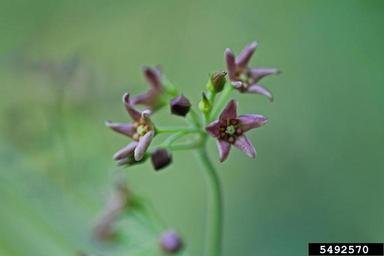
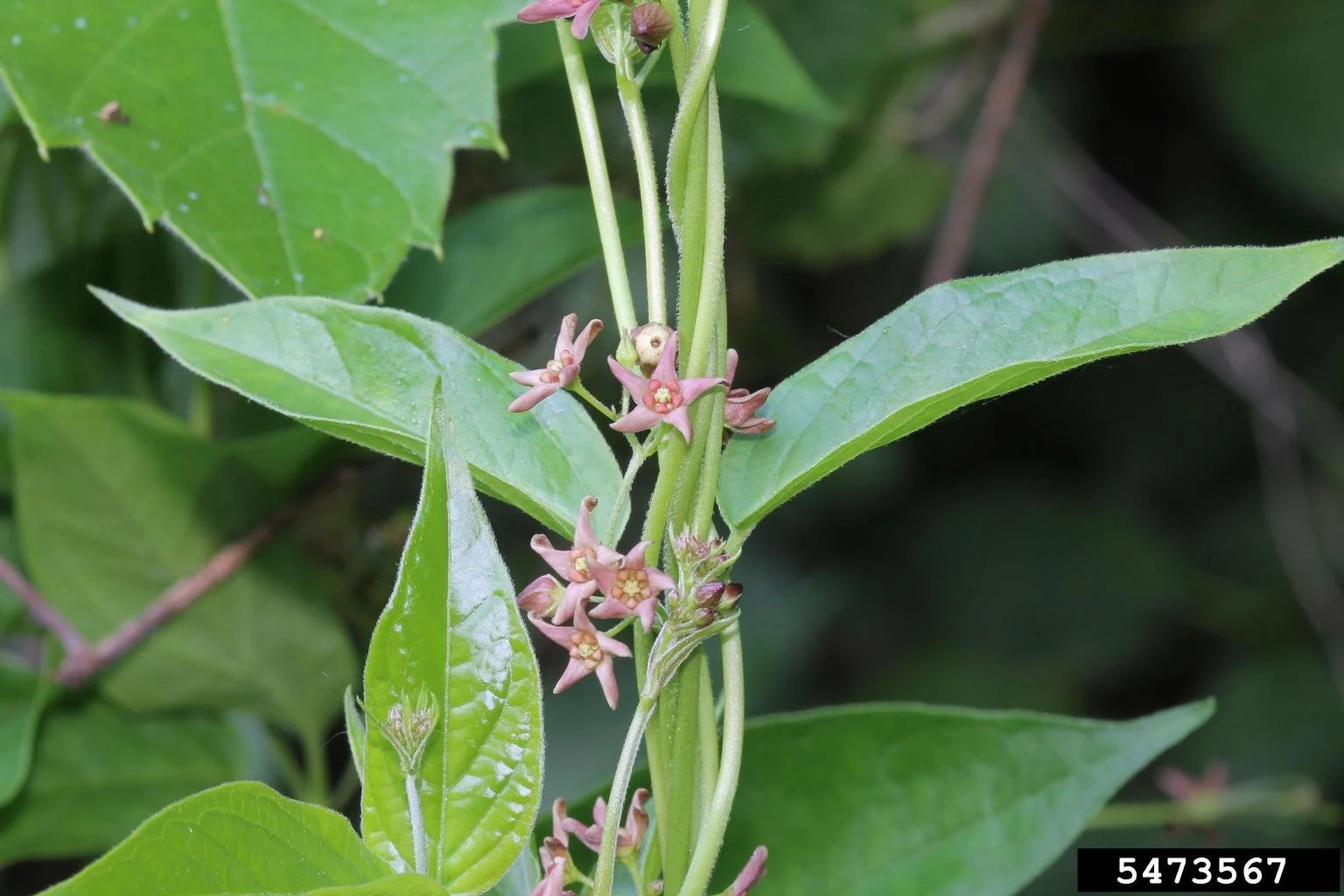
Black Swallow-wort.
Photo: Rob Routeldge, Sault College, Bugwood.org
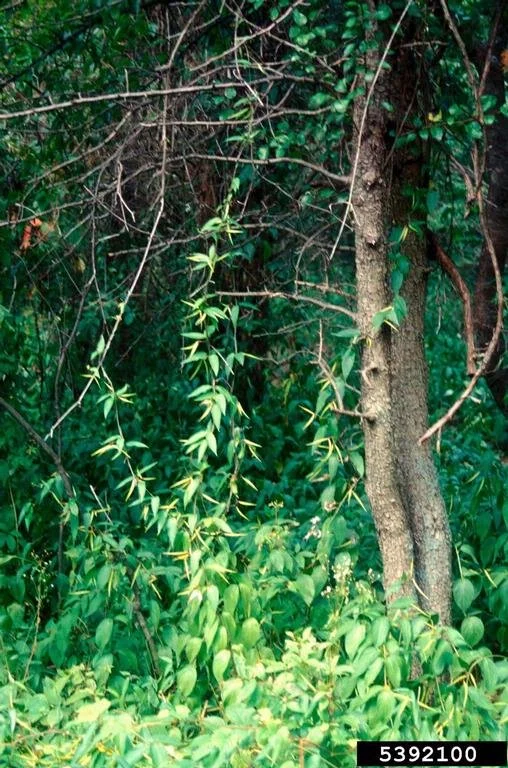
Pale Swallow-wort.
Photo: Rob Routledge, Sault College, Bugwood.org
Twining vines strangle trees and block out undergrowth.
Photo: John M. Randall, The Nature Conservancy, Bugwood.org
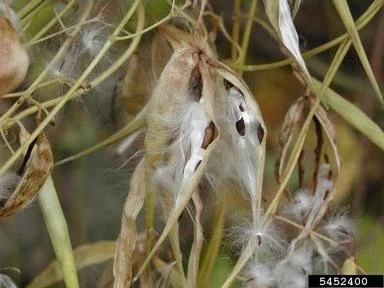
Seed pods are often confused for milkweed by pollinating and egg laying insects, such as the monarch butterfly. Caterpillars hatched on European swallow-worts will not survive.
Photo: Leslie J. Mehrhoff, Bugwood.org